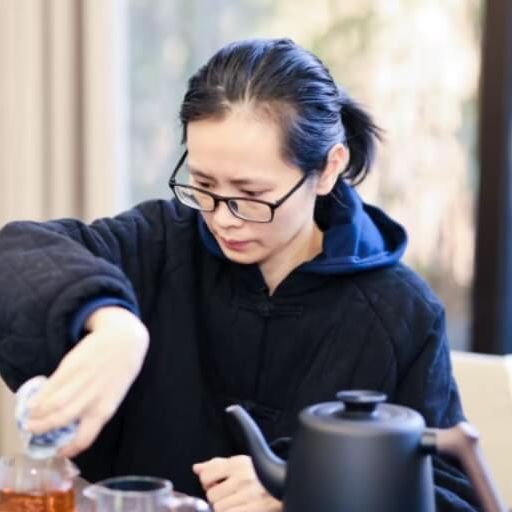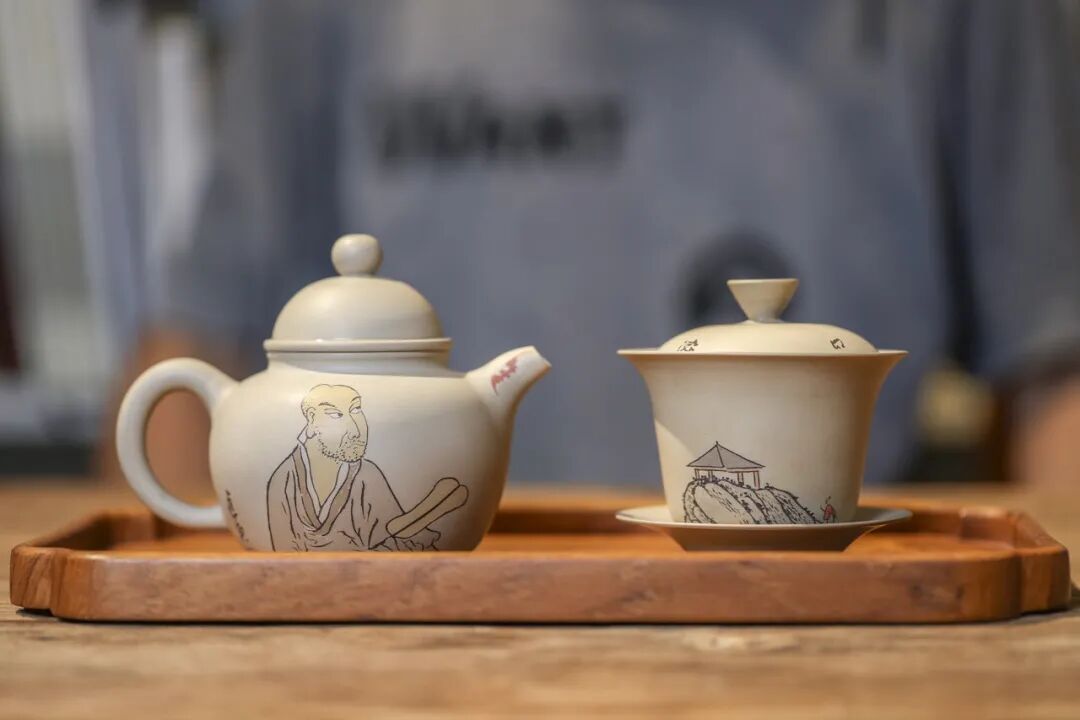
A gaiwan and a teapot can both make excellent tea, but they do not brew in the same way.
A gaiwan is open, flexible, and easy to clean. It gives you direct control over steeping time, leaf movement, aroma, and the look of the tea liquor. A teapot is more enclosed, usually holds heat better, and often creates a rounder, fuller brewing experience.
For beginners, the short answer is:
Choose a porcelain gaiwan if you want to learn tea clearly. Choose a small teapot if you want comfort, heat retention, and a slower drinking rhythm.
Neither is automatically better. They simply solve different brewing problems.
Quick Comparison
| Feature | Gaiwan | Teapot |
|---|---|---|
| Structure | Bowl, lid, saucer | Body, lid, handle, spout |
| Brewing style | Open and direct | Enclosed and stable |
| Heat retention | Lower | Usually higher |
| Pour control | Very fast once learned | Easier for beginners |
| Cleaning | Very easy | Depends on spout and filter |
| Best for learning | Excellent | Good |
| Best for delicate tea | Excellent | Depends on material |
| Best for aged or roasted tea | Good | Often excellent |
| Risk for beginners | Burns fingers | Over-steeping |
| Best first material | Porcelain | Porcelain or small glazed teapot |
What Is a Gaiwan?
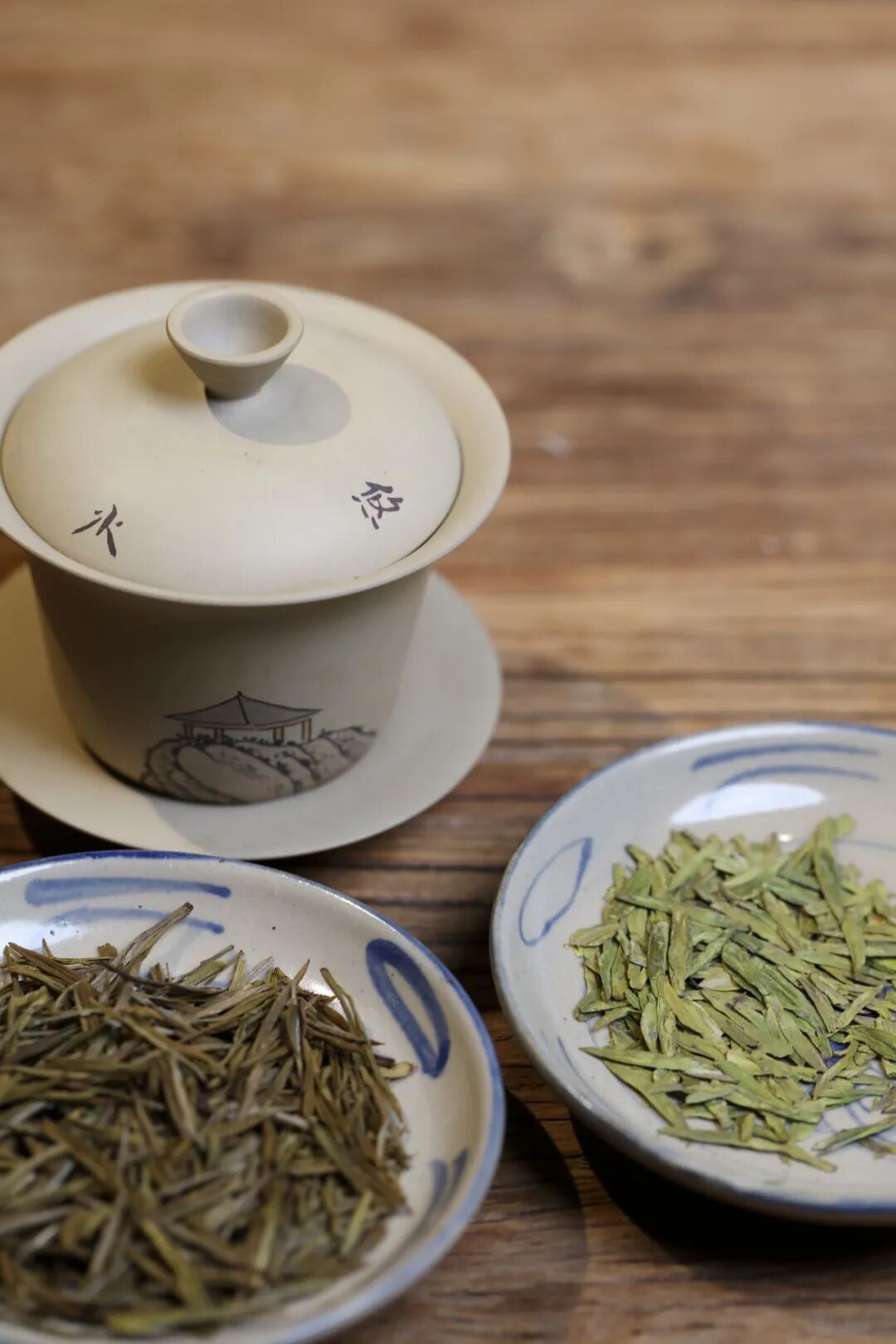
A gaiwan is a Chinese lidded bowl used for brewing tea. It usually has three parts:
| Part | Function |
|---|---|
| Lid | Holds heat, controls pouring gap, keeps leaves back |
| Bowl | Holds tea leaves and water |
| Saucer | Protects fingers and stabilizes the bowl |
In Chinese, gaiwan means “covered bowl.” It is also called a sancai wan, or “three talents bowl.” In traditional symbolism, the lid represents heaven, the bowl represents humanity, and the saucer represents earth.
For Western readers, you do not need to treat that symbolism as a rule. Functionally, the design is simple: the gaiwan lets you brew, smell, pour, and inspect tea with very little interference.
What Is a Teapot?
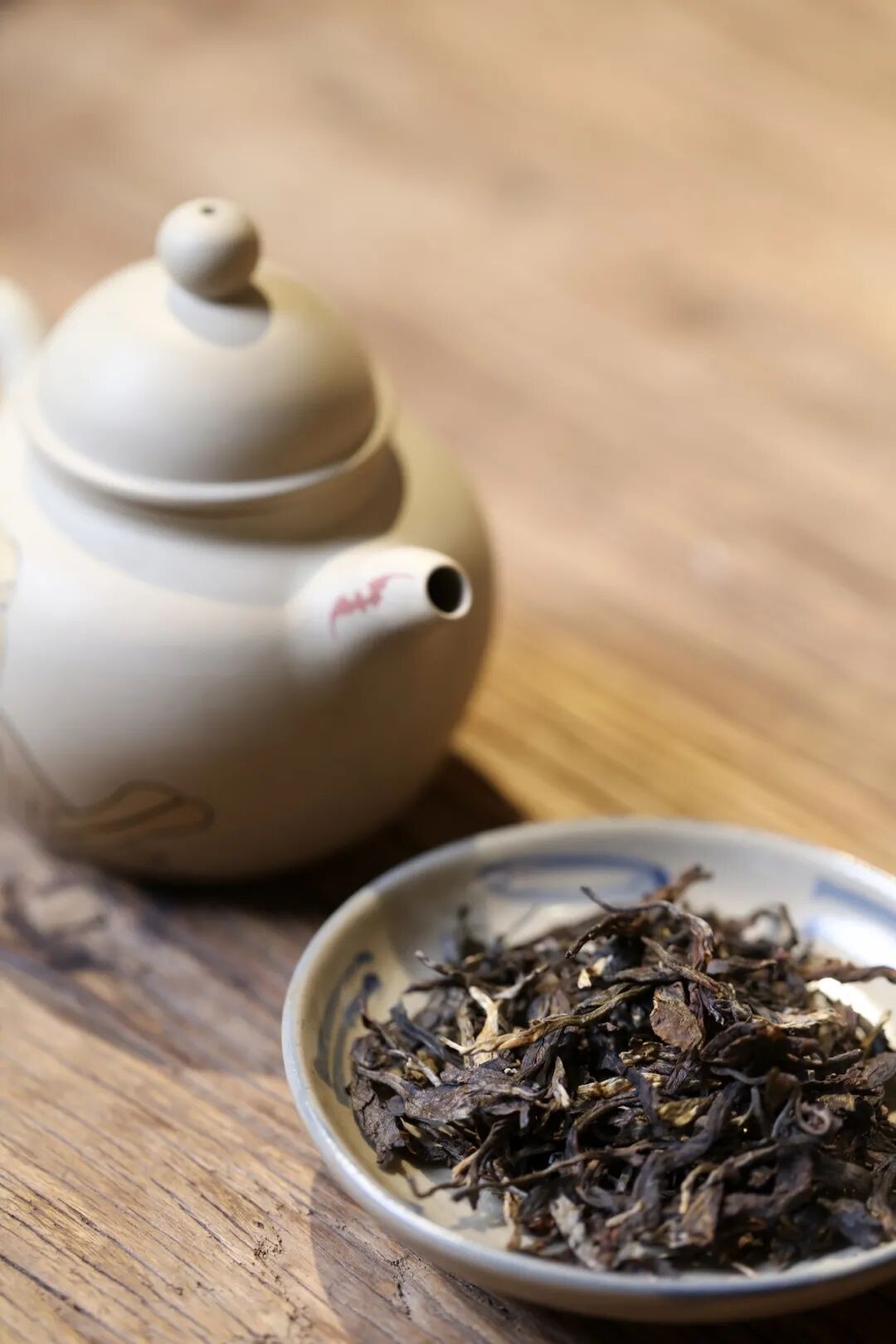
A teapot is a closed brewing vessel with a handle and spout. Chinese teapots may be made from porcelain, glazed ceramic, unglazed clay, glass, or Yixing zisha clay.
| Teapot Part | Function |
|---|---|
| Body | Holds leaves and water |
| Lid | Keeps heat inside |
| Spout | Directs the pour |
| Handle | Protects the hand from heat |
| Filter holes | Hold back tea leaves |
A teapot is usually easier to hold than a gaiwan. It also retains heat better, especially if the walls are thick or the material is clay.
The Main Difference: Open vs Closed Brewing
The biggest difference is not cultural. It is structural.
| Brewing Factor | Gaiwan | Teapot |
|---|---|---|
| Leaf visibility | High | Low |
| Heat loss | Faster | Slower |
| Pour speed | Very fast with practice | Depends on spout design |
| Aroma access | Easy to smell lid and leaves | Aroma stays more enclosed |
| Risk of over-extraction | Lower if poured quickly | Higher if pour is slow |
| Cleaning | Simple | More parts to clean |
A gaiwan gives you more feedback. A teapot gives you more insulation.
That is why gaiwans are often used for tasting and comparison, while many daily tea drinkers enjoy teapots for relaxed sessions.
What Science Can and Cannot Say
There are not many studies that directly compare “gaiwan vs teapot” in the exact way tea drinkers discuss it. But related research does support the broader idea that vessel design, material, water, and brewing conditions influence tea flavor.
Studies have found that:
- Teacup shape can influence how people perceive bitterness, sweetness, aftertaste, aroma, and presentation.[1]
- Teapot material can affect catechin levels and sensory responses in green, oolong, and black tea.[2]
- Yixing clay teapots can change the chemical profile of oolong tea infusions compared with other materials.[3]
- Water composition, brewing time, and temperature affect tea extraction and sensory quality.[4][5]
So the careful conclusion is:
The vessel does matter, but tea quality, water, leaf amount, temperature, and steeping time usually matter more.
Which Tea Works Better in a Gaiwan?
A gaiwan is often best when you want control, clarity, and fast pouring.
| Tea Type | Why a Gaiwan Works |
|---|---|
| Green tea | Faster cooling helps avoid cooked or bitter flavors |
| White tea | Easy to watch leaf opening and liquor color |
| Light oolong | Lid aroma is easy to smell |
| Dancong oolong | Fast pouring helps control bitterness |
| Black tea | Quick steeps reduce harshness |
| Tea comparison | Neutral porcelain shows the tea clearly |
A porcelain gaiwan is especially useful because it does not absorb aroma. You can brew green tea, oolong, black tea, and white tea in the same gaiwan without worrying much about flavor carryover.
Which Tea Works Better in a Teapot?
A teapot is often best when heat retention and comfort matter more.
| Tea Type | Why a Teapot Works |
|---|---|
| Roasted oolong | Stable heat supports deeper aroma |
| Wuyi rock tea | Small teapots work well for repeated hot infusions |
| Ripe Pu-erh | Heat retention helps create a smooth, dark liquor |
| Aged raw Pu-erh | Slow, stable extraction can soften rough edges |
| Liu Bao or dark tea | Clay or ceramic pots can support fuller texture |
| Black tea | Easy daily brewing for multiple people |
A teapot is also useful when serving several people. It is easier to pour without worrying about finger placement.
Gaiwan Flavor Profile
A gaiwan often produces a tea that feels cleaner, brighter, and more transparent.
| Sensory Feature | Typical Gaiwan Effect |
|---|---|
| Aroma | Easy to smell from lid and wet leaves |
| Texture | Clear and direct |
| Bitterness control | Good, because pouring can be very fast |
| Leaf observation | Excellent |
| Best experience | Learning the tea’s true character |
This is why a gaiwan is a strong choice for beginners who want to understand tea rather than simply drink it.
Teapot Flavor Profile
A teapot often produces a tea that feels warmer, rounder, and more integrated.
| Sensory Feature | Typical Teapot Effect |
|---|---|
| Aroma | More enclosed and concentrated |
| Texture | Often fuller |
| Heat | More stable |
| Pouring | Easier, but sometimes slower |
| Best experience | Relaxed sessions and repeated brewing |
Unglazed clay teapots are more complicated. Some tea drinkers believe they soften harshness or improve mouthfeel. Research on Yixing materials suggests teapot material can influence tea infusion chemistry, but this does not mean every clay pot improves every tea.[3]
Porcelain Gaiwan vs Yixing Teapot
This is the classic comparison.
| Feature | Porcelain Gaiwan | Yixing Teapot |
|---|---|---|
| Flavor influence | Neutral | May influence aroma and texture |
| Cleaning | Easy | More careful |
| Tea switching | Easy | Usually dedicated to one tea family |
| Beginner-friendly | Medium | Medium to advanced |
| Cost | Often affordable | Can be expensive |
| Best use | Learning and comparison | Focused brewing for specific teas |
If you are new to Chinese tea, start with porcelain first. Buy a Yixing teapot later, after you know which tea category you drink often.
Why Some Tea Drinkers Use One Clay Pot for One Tea
Unglazed clay can be porous. Over time, it may retain trace aroma compounds and tea residue. This is why many tea drinkers dedicate one clay teapot to one tea family, such as roasted oolong, ripe Pu-erh, or Wuyi rock tea.
This is not a legal rule. It is a flavor-control habit.
| If You Use One Clay Pot for Everything | Possible Problem |
|---|---|
| Ripe Pu-erh, jasmine tea, and green tea in one pot | Aromas may mix |
| Strong roasted tea followed by delicate tea | Delicate tea may taste muted |
| Scented tea in porous clay | Floral scent may linger |
Porcelain and glazed ceramic do not have this problem to the same degree.
Which Is Easier for Beginners?
It depends on what “easy” means.
| Beginner Goal | Better Choice |
|---|---|
| Avoid burning fingers | Teapot |
| Learn tea flavor clearly | Gaiwan |
| Brew many tea types | Porcelain gaiwan |
| Serve guests casually | Teapot |
| Clean quickly | Gaiwan |
| Practice gongfu brewing | Gaiwan |
| Drink while working | Teapot or infuser mug |
A gaiwan is conceptually simple but physically awkward at first. A teapot is physically easy but can hide mistakes because you cannot see the leaves as clearly.
How to Hold a Gaiwan Safely
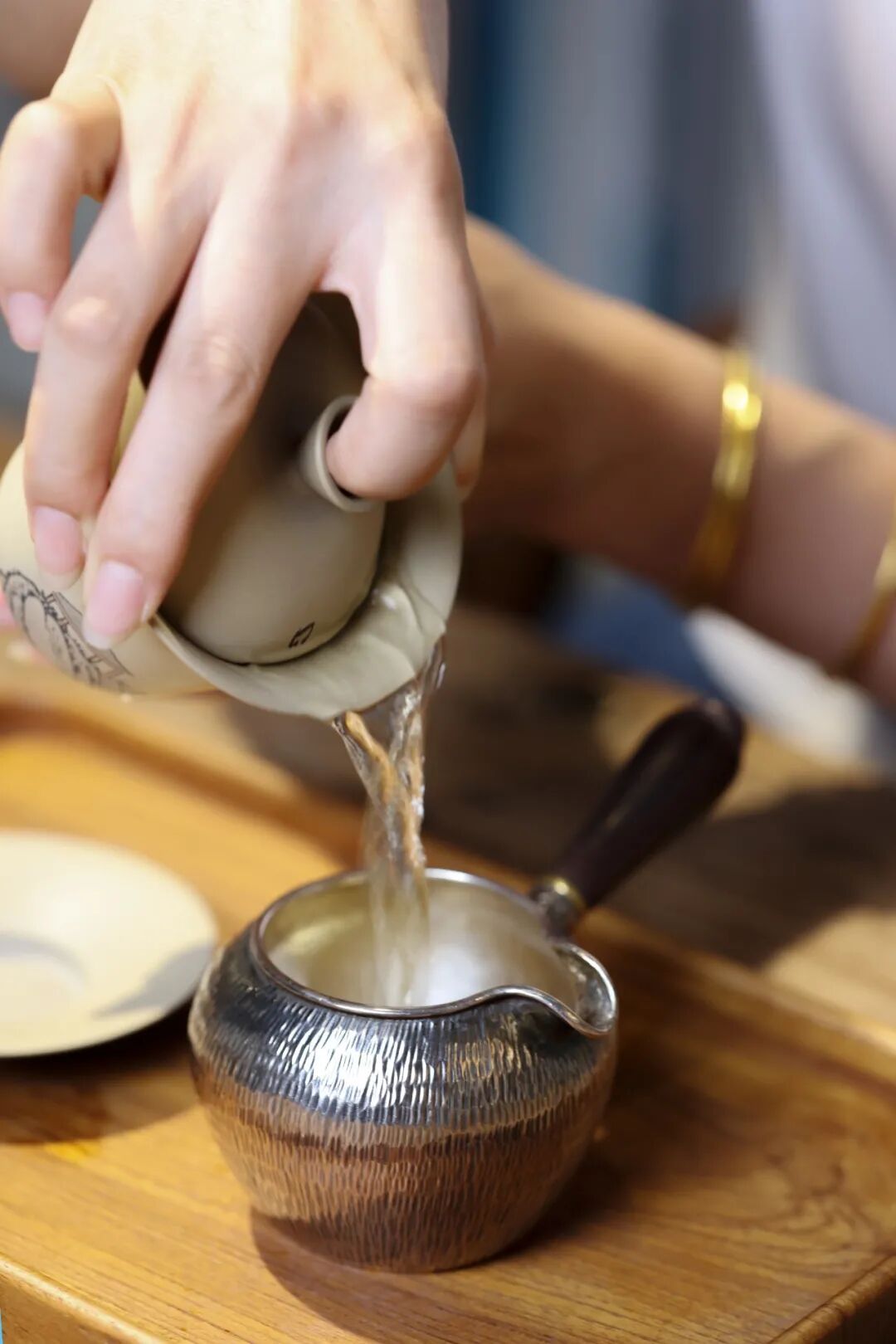
The simplest method is the three-finger hold.
| Finger | Role |
|---|---|
| Thumb | Holds one side of the rim |
| Middle finger | Holds the opposite side |
| Index finger | Presses lightly on the lid knob |
Begin with cooler water and a smaller gaiwan. A 100-120 ml gaiwan is easier to control than a large one.
Do not fill the gaiwan to the brim. Leave enough space so the rim is not too hot to touch.
How to Choose the Right Size
| Use Case | Recommended Size |
|---|---|
| Solo gongfu brewing | 80-120 ml gaiwan or teapot |
| Two people | 100-150 ml |
| Three to five people | 150-250 ml teapot |
| Western-style brewing | 300-500 ml teapot |
For beginners, a 100-120 ml porcelain gaiwan is the most flexible starting point.
Tea-by-Tea Recommendation
| Tea | Gaiwan or Teapot? | Why |
|---|---|---|
| Green tea | Gaiwan or glass cup | Avoids overheating |
| Fresh white tea | Gaiwan | Shows aroma and leaf clearly |
| Aged white tea | Teapot or gaiwan | Both work; teapot gives more warmth |
| Light Tie Guan Yin | Gaiwan | Highlights aroma |
| Phoenix Dancong | Gaiwan | Better control over bitterness |
| Wuyi rock tea | Small teapot or gaiwan | Teapot gives warmth; gaiwan gives clarity |
| Black tea | Both | Gaiwan for tasting, teapot for comfort |
| Ripe Pu-erh | Teapot | Heat retention helps body |
| Raw Pu-erh | Both | Gaiwan for young tea, teapot for aged tea |
| Jasmine tea | Gaiwan or porcelain pot | Avoid porous clay because scent lingers |
Cultural Background
Chinese tea culture has used different brewing forms across history. Lu Yu’s The Classic of Tea records an earlier world of tea tools and tea preparation.[6] Later, as loose-leaf tea became more common, vessels such as teapots and lidded bowls became more important.
Yixing teapots became especially associated with literati taste and collectible teaware. The British Museum collection includes Yixing ware teapots from the Qing dynasty, reflecting their historical place in Chinese teaware culture.[7]
The gaiwan, by contrast, is often more accessible and flexible in daily use. It appears in teahouses, homes, tastings, and daily service. In places like Sichuan, gaiwan tea is strongly connected with public teahouse culture.
For a modern beginner, the cultural lesson is simple:
The teapot is often about continuity and warmth. The gaiwan is often about clarity and control.
Should You Buy a Gaiwan or Teapot First?
If you are buying your first serious Chinese tea vessel, choose based on your actual use.
| Your Situation | Buy First |
|---|---|
| You want to learn many teas | Porcelain gaiwan |
| You mostly drink oolong | Gaiwan first, small teapot later |
| You mostly drink ripe Pu-erh | Small teapot |
| You drink green and white tea | Gaiwan |
| You serve family or guests | Teapot |
| You want the easiest handling | Teapot |
| You want the most flexible tool | Gaiwan |
My practical recommendation:
Start with a white porcelain gaiwan. Add a small teapot later when you know which tea you drink most.
Common Mistakes
| Mistake | Why It Matters | Fix |
|---|---|---|
| Buying a large gaiwan first | Harder to handle and pour | Start with 100-120 ml |
| Using one clay pot for all teas | Aromas can mix | Use porcelain for variety |
| Overfilling a gaiwan | Burns fingers | Fill to about 70-80% |
| Buying expensive Yixing too early | Hard to judge quality | Learn tea first |
| Using a slow-pouring pot for delicate tea | Tea over-extracts | Use faster pours or shorter steeps |
| Choosing beauty over function | Poor spout or lid fit is frustrating | Test comfort and pour quality |
FAQ
Is a Gaiwan Better Than a Teapot?
Not always. A gaiwan is better for control and learning. A teapot is better for comfort, heat retention, and relaxed serving.
Can I Brew All Teas in a Gaiwan?
Yes, especially if it is porcelain. That does not mean every tea will taste best in a gaiwan, but it is the most versatile learning tool.
Can I Brew All Teas in One Teapot?
If the teapot is porcelain or glazed ceramic, yes. If it is unglazed clay, it is better to dedicate it to one tea family.
Is Yixing Clay Necessary?
No. Yixing teapots can be beautiful and useful, but they are not required for good tea.
Why Do Tea Professionals Use Gaiwans?
Because gaiwans are neutral, fast, easy to clean, and good for observing tea liquor, aroma, and leaf quality.
Final Advice
A gaiwan teaches you tea. A teapot comforts you into tea.
If you are still exploring green tea, white tea, oolong, black tea, and Pu-erh, start with a porcelain gaiwan. It is affordable, neutral, and flexible.
If you already know you love roasted oolong, ripe Pu-erh, or aged tea, a small teapot can make your tea sessions warmer and more satisfying.
The best choice is not the most traditional or expensive one. It is the vessel that helps you brew better tea more often.
References
- Yang S-C, Peng L-H, Hsu L-C. The Influence of Teacup Shape on the Cognitive Perception of Tea, and the Sustainability Value of the Aesthetic and Practical Design of a Teacup.
- Lin P-J, Zhang Y-X. How Teapot Materials and Tea Types Affect Flavor, Feelings, and Buying Behavior.
- Liao Z-H, Chen Y-J, Tzen J T-C, Kuo P-C, Lee M-R, Mai F-D, Rairat T, Chou C-C. Effect of teapot materials on the chemical composition of oolong tea infusions.
- Franks M, Lawrence P, Abbaspourrad A, Dando R. The Influence of Water Composition on Flavor and Nutrient Extraction in Green and Black Tea.
- Cao Q-Q, Wang J-Q, Chen J-X, Wang F, Gao Y, Granato D, Zhang X, Yin J-F, Xu Y-Q. Optimization of Brewing Conditions for Tieguanyin oolong tea by quadratic orthogonal regression design.
- Chinese Text Project. Chajing 茶經 (The Classic of Tea).
- British Museum. Teapot.